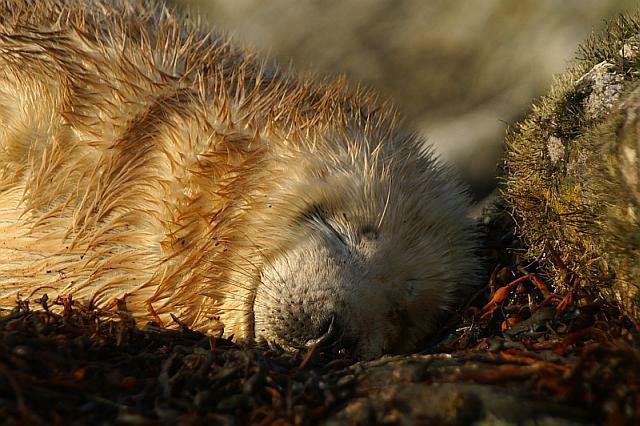
Young Grey Seal Pup Learning to Swim

One of the privileges of spending time on Lingay is photographing and filming the wildlife.  Getting up early in the morning when the clarity of light is at its best or as the sun is going down in the evening.

Late last summer we were sitting on one of the cliff tops looking towards Scaravay Island in the evening.  Being wrapped up warmly we were protected from the chill in the air.  Directly below us a grey seal mother was encouraging her young pup to swim.  The pup can’t have been more than a few days old.  We sat and watched transfixed for about quarter of an hour, and even though the light was fading, we managed to get some film footage – click the link below…

This was a truly magical experience!

Common and Atlantic Grey Seals

Copyright Claire Newton. All Rights Reserved.Monitored by the Sea Mammal Research Unit annually, the islands of Lingay and Groay have been managed for conservation over the last decade and are recognised breeding sites for both Atlantic Grey and Common (or Harbour) Seals.

Haul out sites exist around both islands, with the main concentration of seals being in the sheltered areas on both islands and on the tidal island in-between.

Copyright Claire Newton. All Rights Reserved.It is known that the seals return to the same breeding sites generation after generation.

The female grey seals give birth mainly during October and November.  At birth the pups weigh about 13Kg and are protected by a creamy white coat.  The pups are weaned after losing their cream coat approximately 3-4 weeks after birth.  They will have gained about three times their birth weight, which they use to survive on whilst they learn to feed which may take several weeks.

Copyright Claire Newton. All Rights Reserved.The female common seal gives birth in Spring.  The pups are well formed (weighing up to 16Kg) and are capable of swimming and diving within hours of birth.  They suckle for 3-4 weeks, putting weight on quickly on their mothers rich milk diet.  By the time they are weaned they can have doubled their weight.

Otters

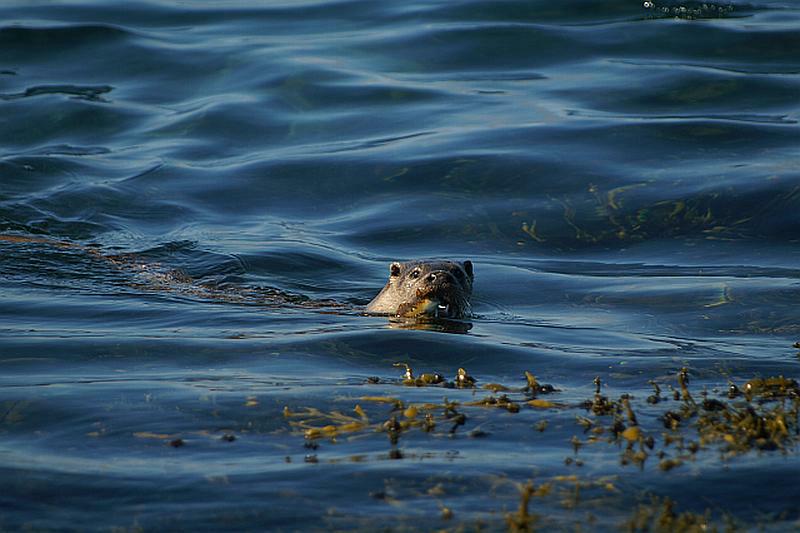
There is a significant long-standing population of otters established and breeding on both Lingay and neighbouring Groay Islands, as well as regularly occupying the tidal island in-between Lingay and Groay. Copyright Claire Newton. All Rights Reserved.Removal of the disturbance from sheep grazing from Lingay has increased the population over recent years and work on the island has given a unique insight into the feeding behaviour of these otters.  They can be seen frequently swimming between the islands, and sometimes when with young, teaching them to fish and forage for food.